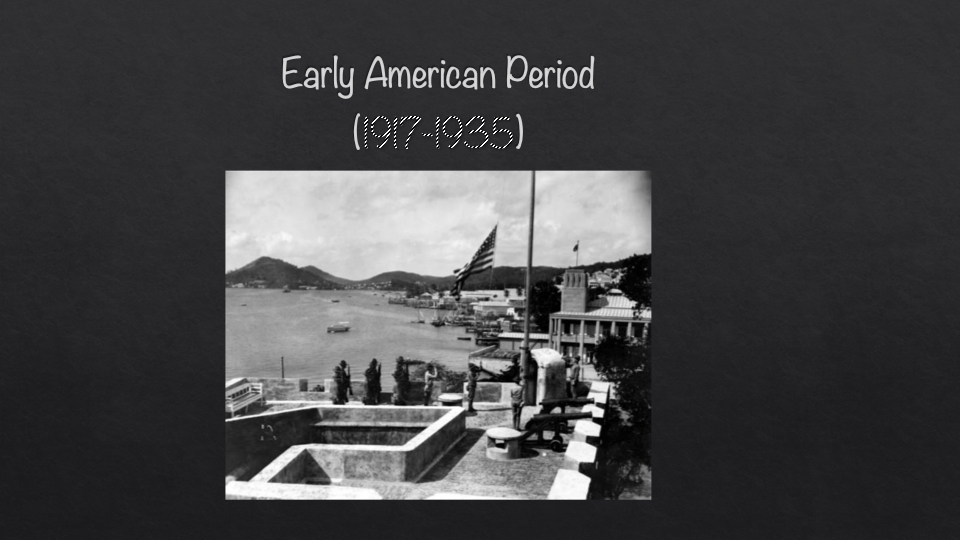
Early American Period
As part of VIAC’s Old Barracks Neighborhood Storytelling Project, Writer/Researcher Anurie D. Oliver develops educational lessons designed to bring Virgin Islands history, culture, and community into the classroom. The lessons explore significant people, events, movements, and issues in Virgin Islands history while encouraging students to examine themes such as cultural identity, migration, labor and civil rights, civic engagement, political representation, self-government, community, and the continued influence of the past on the Virgin Islands today. Aligned with the Kallaloo Framework, the lessons place Virgin Islands history, culture, and community at the center of learning through historical research, writing, discussion, art, reflection, and creative expression. Students are encouraged to think critically about the past, make meaningful connections between history and their own lives and communities, and consider their roles in the future of the Virgin Islands. Through these learning experiences, students are also encouraged to recognize themselves as stakeholders in preserving, celebrating, and sharing Virgin Islands history and cultural knowledge for future generations.
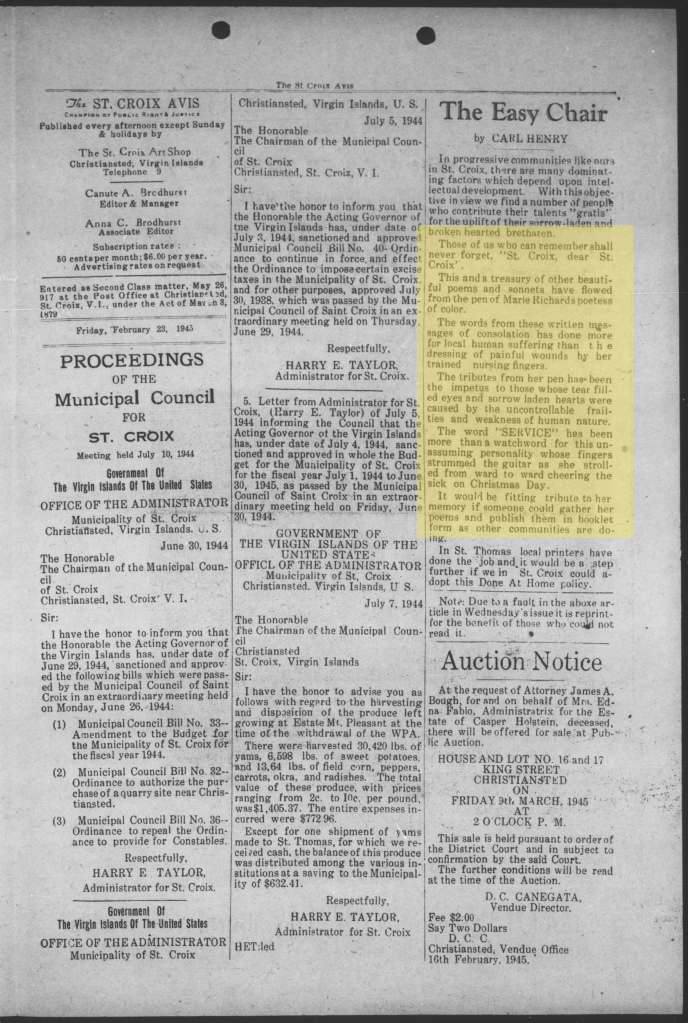
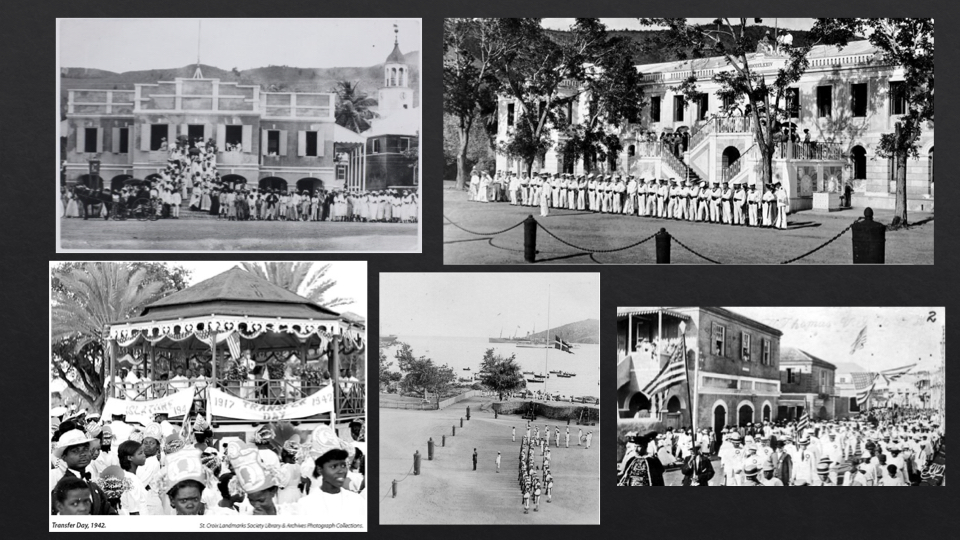
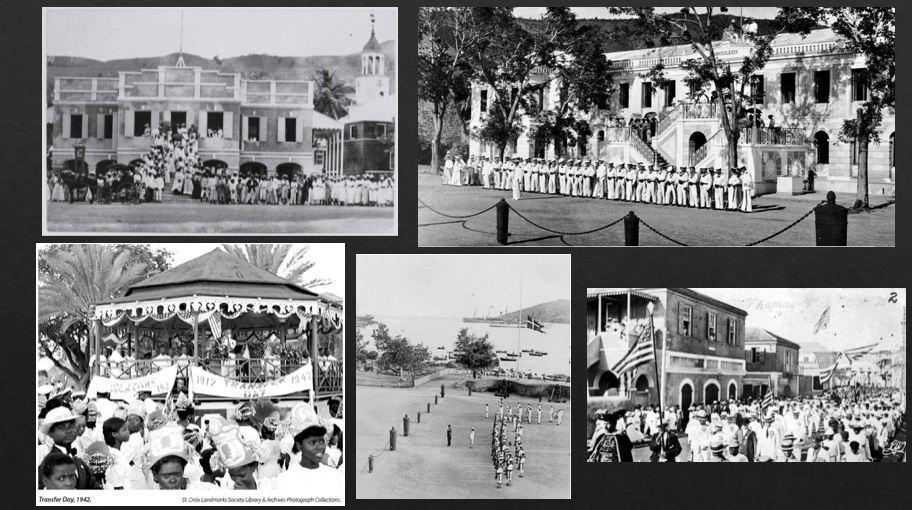
The Danish West Indies become the Virgin Islands of the United States
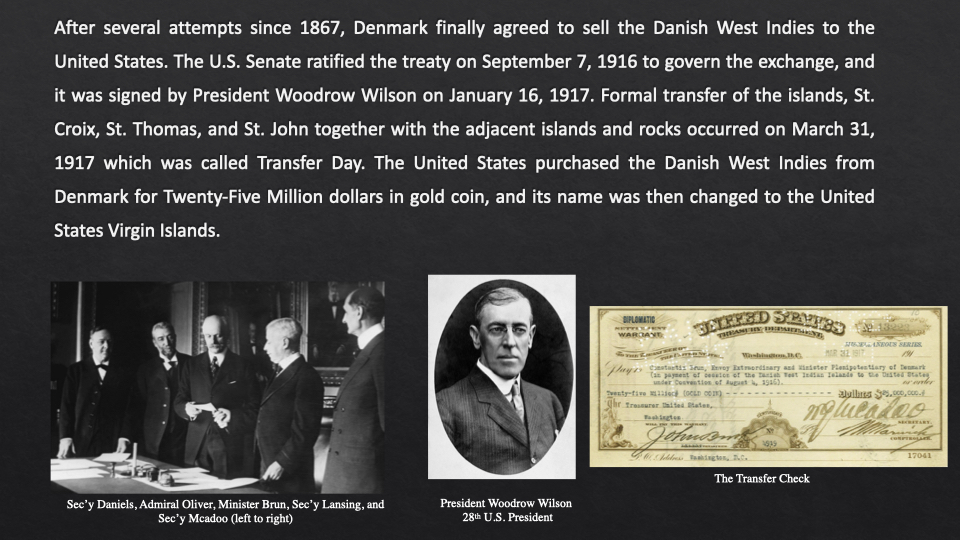
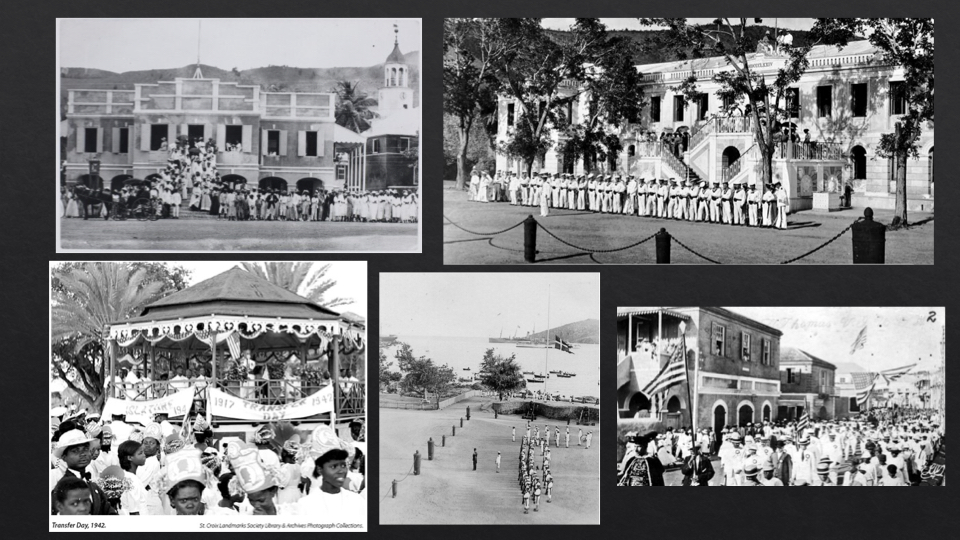
On March 31, 1917, the Danish West Indies became the Virgin Islands of the United States. Denmark received $25 million in gold for three islands and their surrounding cays and islets, covering approximately 144 square miles
and home to about 26,000 people. During World War I, the acquisition strengthened the U.S. military position in the Caribbean and helped protect the Panama Canal. The population reflected centuries of Danish colonialism,
with West African and European ancestry and migrants from neighboring Caribbean islands, particularly Puerto Rico and Barbados.
Setting the Stage for the Sale of the Islands
Economic decline, labor unrest, war, and natural disaster pushed Denmark toward selling its Caribbean colony. After Emancipation and the Fireburn, the sugar industry weakened, especially on St. Croix. Workers led by D. Hamilton Jackson demanded higher wages. World War I disrupted shipping and commerce on St. Thomas, increasing unemployment and food prices. Historian Marilyn Krigger describes the final decades of Danish rule as the “doldrum years,”
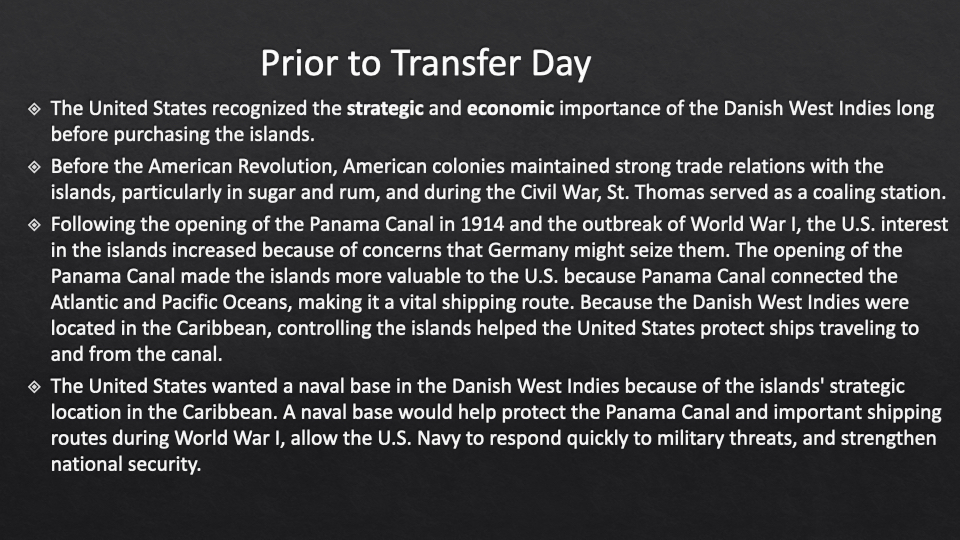
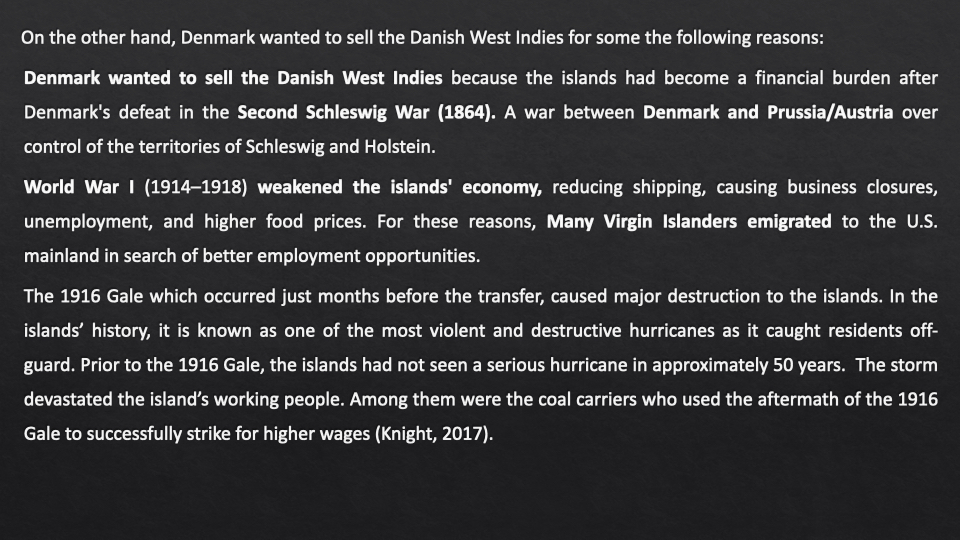
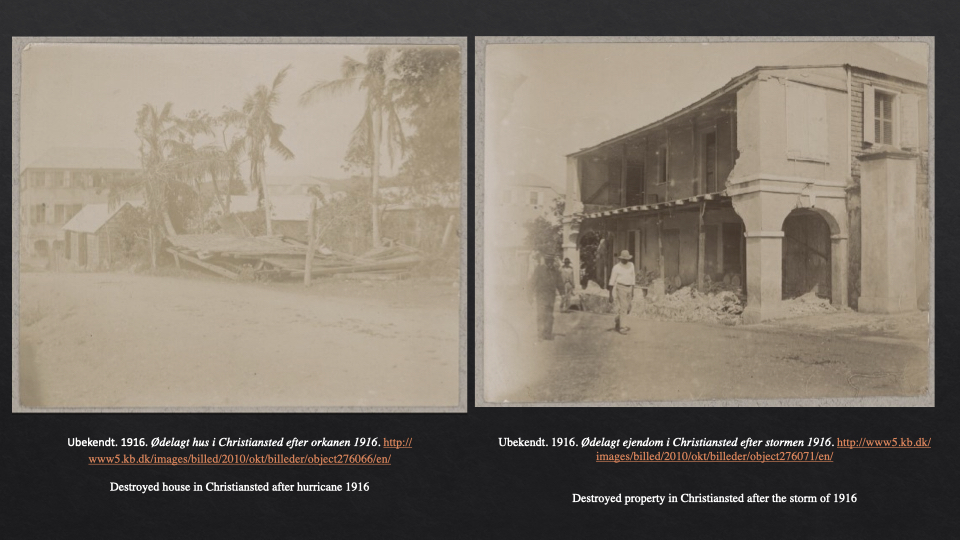
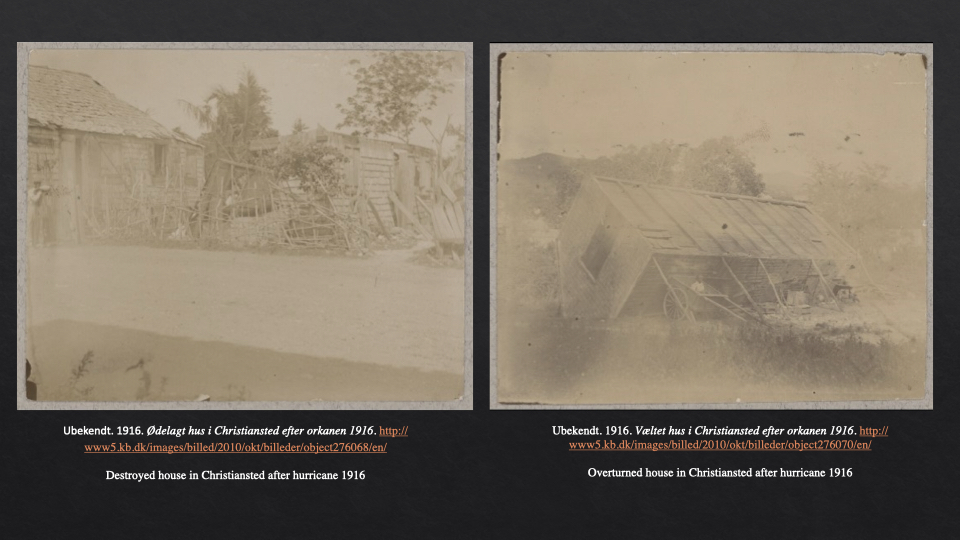
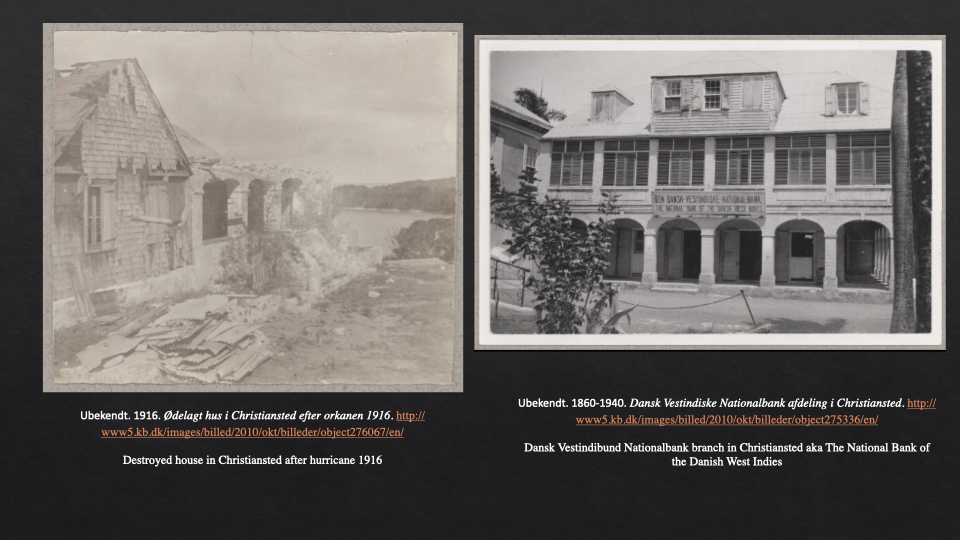
marked by widespread emigration. Denmark’s financial pressures and the destructive hurricane of 1916 further encouraged the sale. The United States had considered purchasing the islands since Abraham Lincoln’s presidency. St. Thomas’s sheltered harbor and the islands’ position along major shipping routes offered strategic advantages. Fear that Germany might seize Denmark and its Caribbean possessions during World War I strengthened American
interest in securing a naval base and protecting the Panama Canal. The U.S. Senate ratified the treaty on September 7, 1916; President Woodrow Wilson signed it on
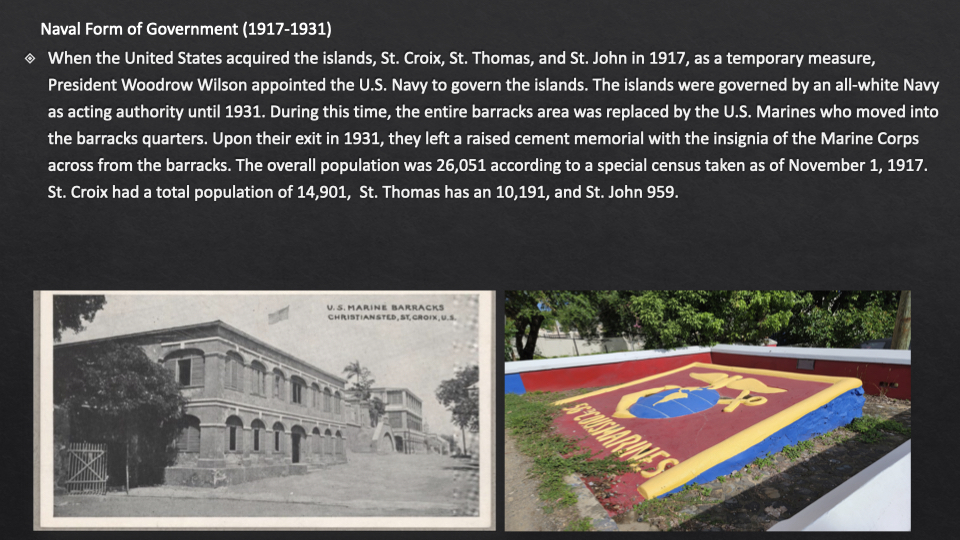
January 16, 1917. The formal transfer followed on March 31. In Christiansted, the Old Barracks on Hospital Street passed from Danish soldiers and gendarmes to American Marines and became a base for policing St. Croix. Before departing in 1931, the Marines left a raised cement memorial bearing the insignia of the 56th U.S. Marines across from the building.
The Navy Governs
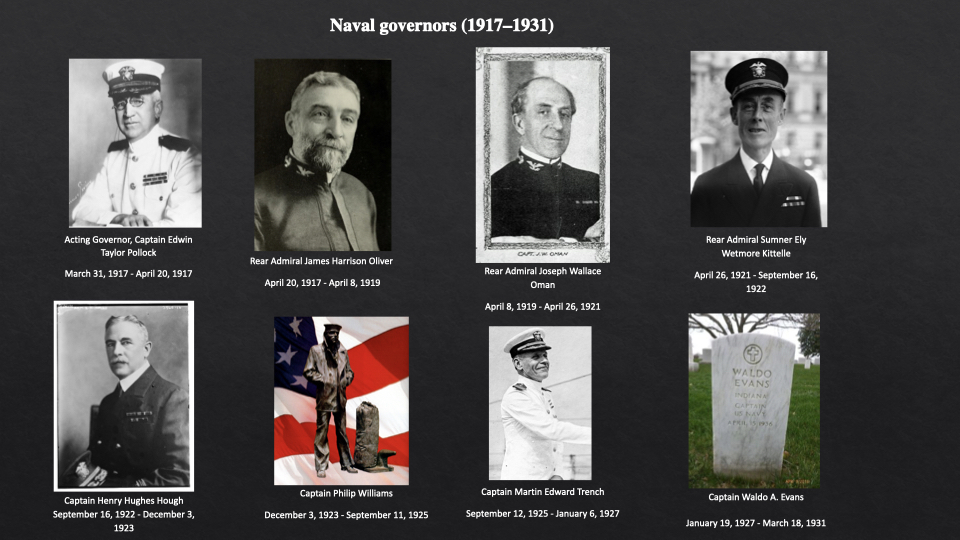
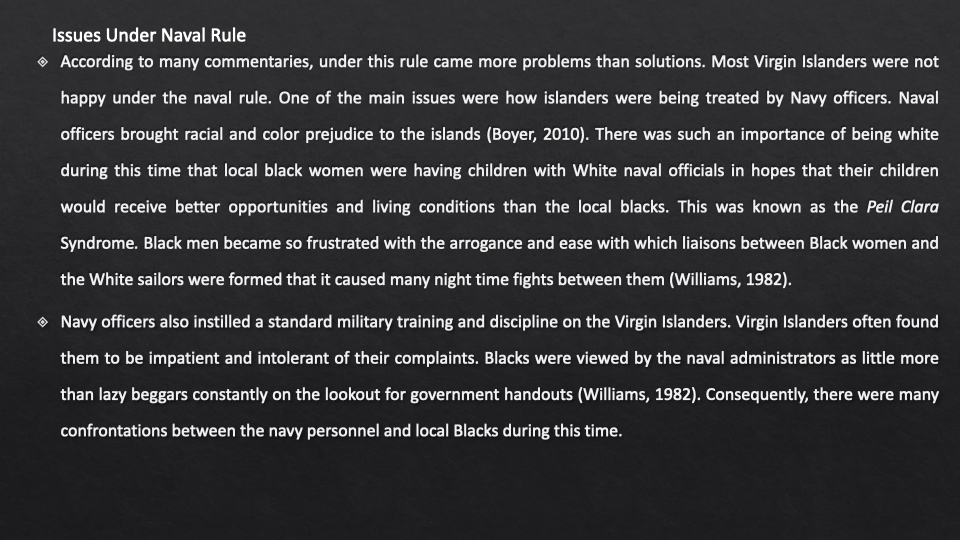
The United States placed the Virgin Islands under Navy administration shortly before entering World War I. Historian William Boyer emphasizes that the purchase served strategic rather than economic or humanitarian purposes. The first naval governor, Rear Admiral James Oliver, reported severe deficiencies in health care, sanitation, water supply, education, and public services. Naval rule combined public-service improvements with racial discrimination and
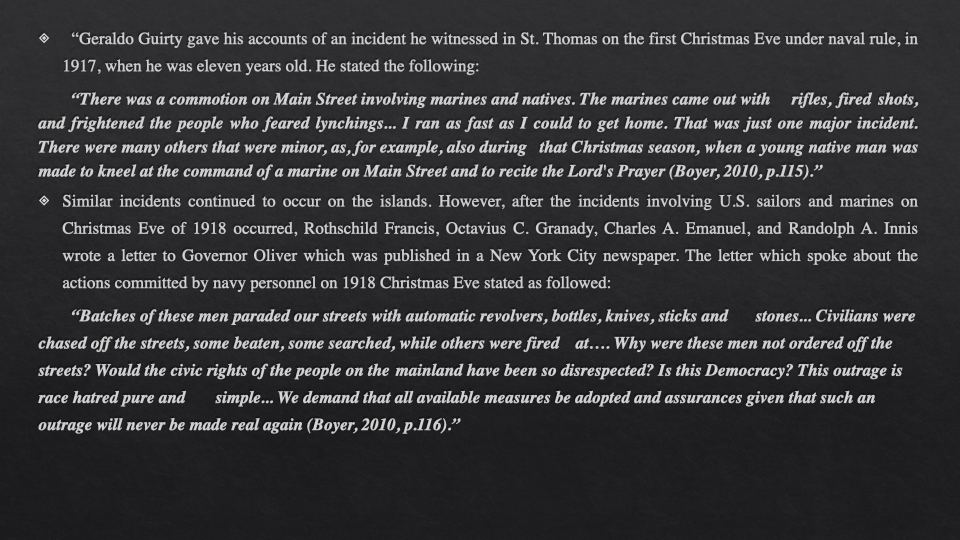
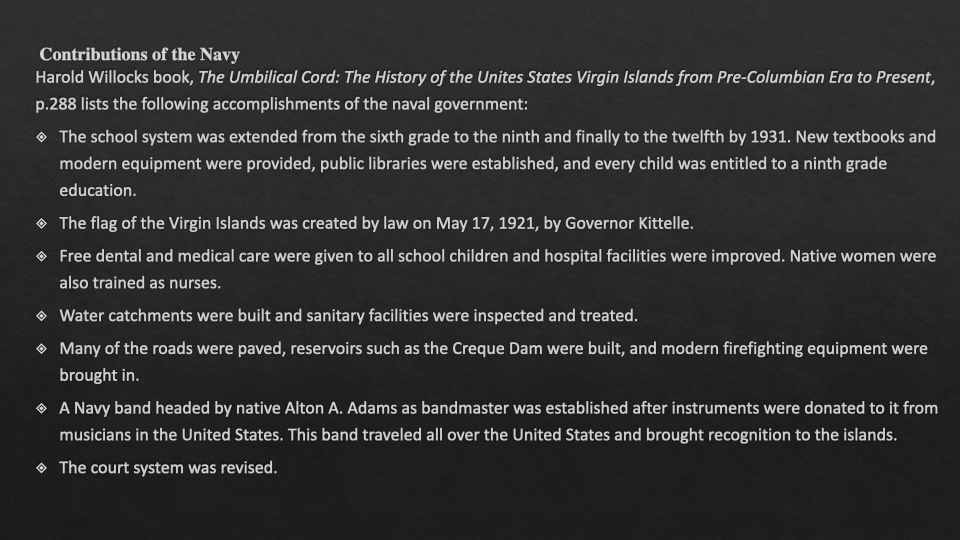
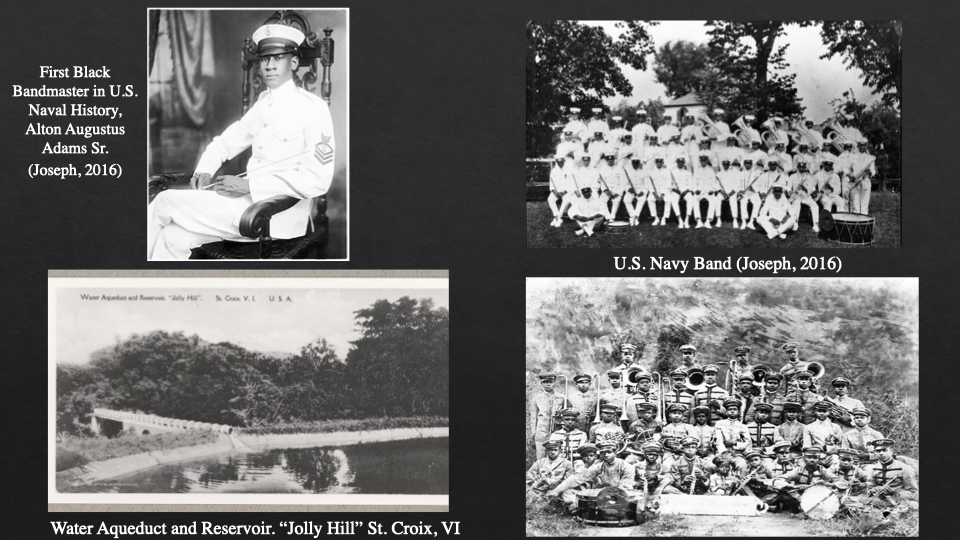
limited political rights. Islanders who expected citizenship instead remained under colonial laws. Boyer describes military occupation as imposing white supremacy on the predominantly Black population, while local newspapers recorded conflicts between residents and naval personnel. The Navy improved hospitals, nursing, vaccination, maternal and infant health, mosquito control, water storage, sewage disposal, policing, and fire protection. Historian Harold Willocks notes that schooling expanded through ninth grade, with new textbooks, equipment, and public libraries. Yet agriculture and economic development received insufficient investment. Declining sugar production, Prohibition’s
restrictions on rum manufacture beginning in 1921, and drought deepened economic hardship. Many Virgin Islanders emigrated, particularly to New York. A hurricane in 1928 and the worldwide economic crash of 1929 worsened
conditions.
The Fight for Civil Rights, Citizenship, and the Emergence of a Free Press
Virgin Islanders at home and abroad organized for better wages, civil rights, citizenship,
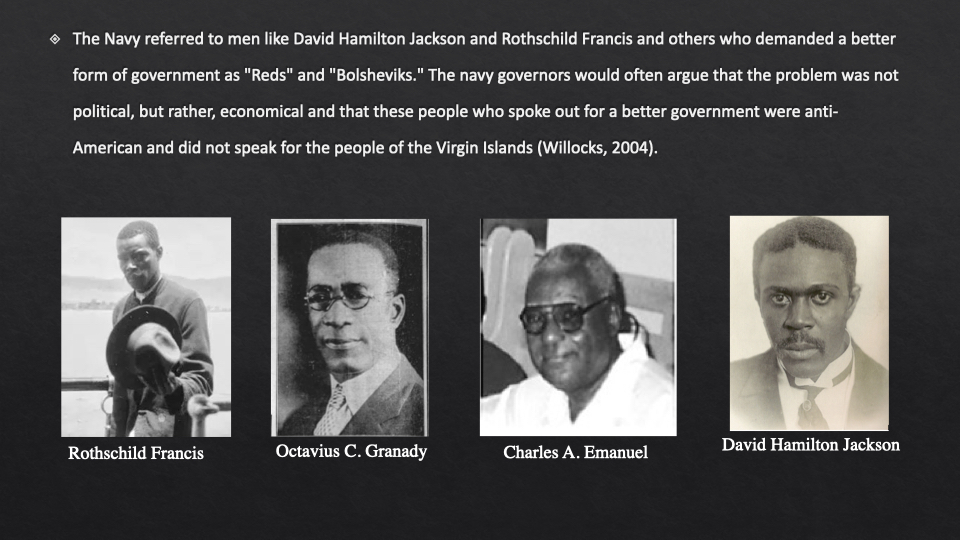
and civilian government. On St. Croix, D. Hamilton Jackson led labor organizing and
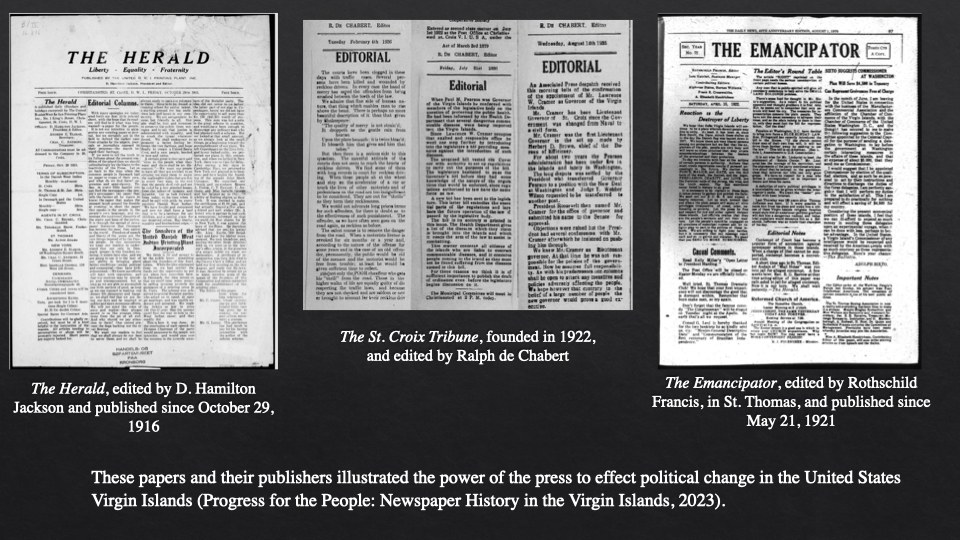
petitioned Denmark for an independent press. His newspaper, the Herald, advocated for
workers and for full citizenship under American rule. On St.
Thomas, Rothschild Francis challenged islanders’ classification as
U.S. nationals rather than citizens and campaigned for voting
rights and an end to naval
government. With support from the
American Civil Liberties Union, he
established the Emancipator. Both
Jackson and Francis faced opposition from officials and
powerful economic interests and were jailed for their
advocacy. In the United States, Ashley Totten became a
leader in the Brotherhood of Sleeping Car Porters.
Casper Holstein used wealth from his Harlem lottery operations to support scholarships
and disaster relief, while advocating for citizenship, civilian rule, voting rights, and an
Organic Act.
1936: An Organic Act and Christiansted High School
Persistent advocacy by Francis, Jackson, Totten, and Holstein helped advance
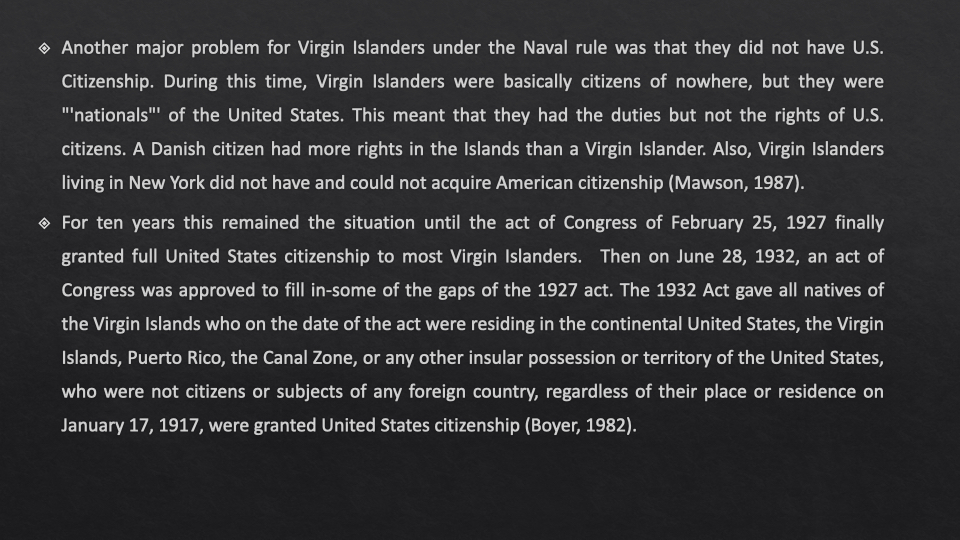
citizenship and self-government. Virgin Islanders received American
citizenship in 1927, with legislation in 1932 extending citizenship to
additional natives regardless of their residence. Naval rule ended in
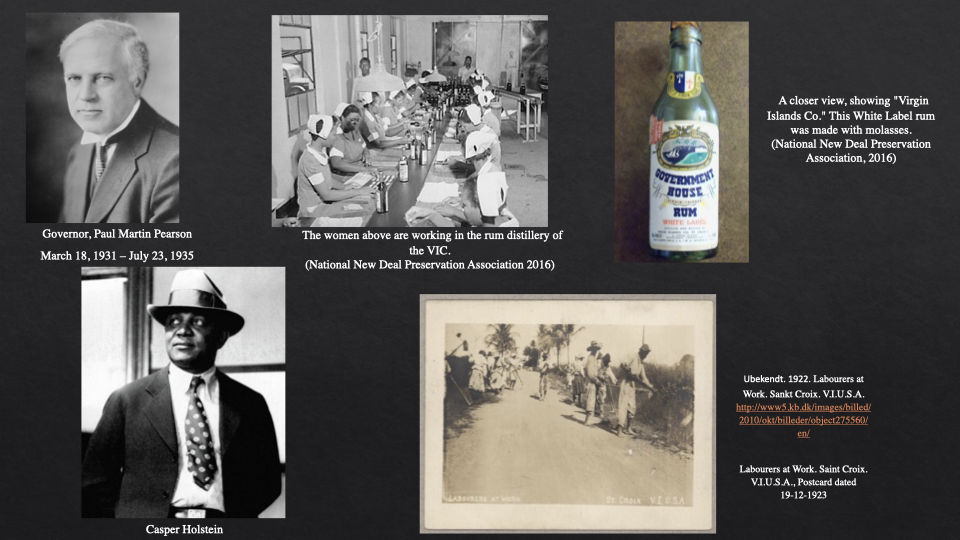
1931 when President Herbert Hoover appointed Paul M. Pearson as
the first civilian governor and transferred administration to the
Department of the Interior. Boyer credits Francis and the American
Civil Liberties Union with initiating a draft organic act. Pearson later carried a draft
constitution to Washington, and its provisions became law in the first Organic Act of
1936. The act extended voting rights to U.S. citizens residing in the islands who were at
least twenty-one and could read and write English. It prohibited slavery, child labor,
imprisonment for debt, and polygamy; established
separation of governmental powers; provided for tax revenues to return to the territorial
treasury; and opened opportunities for political parties and movements. Pearson’s
controversial administration sought to move the islands toward civilian democratic
government. Drawing on New Deal programs, it expanded local participation in
government, strengthened revenues and tax collection, increased farmer
landownership, established the Virgin Islands National Bank, and improved health care
and education. Teacher training, scholarships, and enrollment grew, and the first public
high schools were established on St. Thomas and St. Croix. During Pearson’s tenure,
the Old Barracks became Christiansted High School.
Lesson 1
Virgin Islands Changemakers: for Justice and Progress
Lesson Plan
Featured Historical Figures
As you analyze the contributions of four influential Virgin Islanders keep the following in mind
- Identify common themes among their work, including advocacy, leadership, and social change.
- Evaluate how historical figures can inspire civic engagement today.
- Present findings using evidence and collaboration.
Ashley Totten
David Hamilton Jackson
Rothschild Francis
Casper Holstein
Lesson Activities
Lesson 2
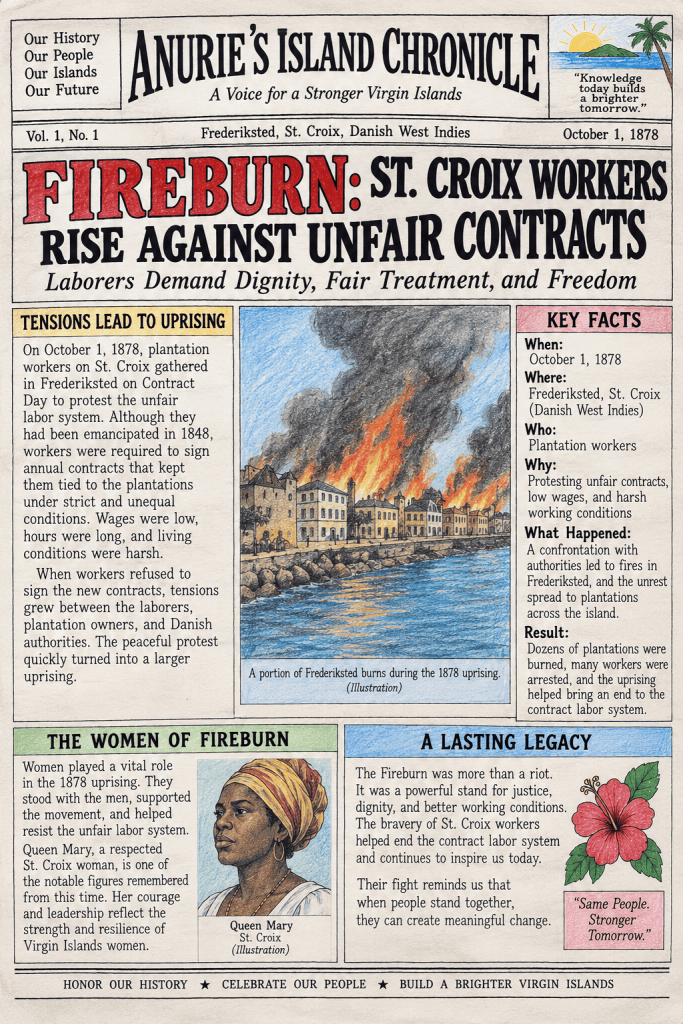
Virgin Islands Historical Newspaper Project
Virgin Islands Historical Newspaper Project Lesson Plan
Student Assignment Guide and Assessment Rubric
Lesson 3
St. Croix, Dear St. Croix” Lesson Plan
Lesson Plan
Supporting Lesson Documents
Historian William Boyer points to the decline in sugar production, the extension of Prohibition to the Virgin Islands in 1921, which forbade the manufacture of rum and distilled spirits and long periods of drought that created an economic depression which started in 1922. Consequently, many Virgin Islanders left their island home and the population declined by 15 percent by 1930 despite immigration from Puerto Rico and the stabilization of death rates. Historian Boyer writes that there were an “estimated twenty thousand Virgin Islanders who by 1930 were residing in the Harlem section alone of New York City – a number almost equal to the total population of those who remained behind.” A song performed by cariso singer Marie Richards describes the sentiment of Virgin Islanders as many of their young people left for opportunities elsewhere.
A song written by Marie Richards on the current issues of time period.